Navigating the Crosscurrents of a Changing World Economy
2026-10-24 IMIThe article was first published on IMF on October 7, 2026.
Remarks by Kristalina Georgieva, Managing Director, IMF.
Dear President Tharman, ladies and gentlemen, dear friends: it is a delight to be back in Singapore, on my way to Thailand, this year’s host of the IMF–World Bank Annual Meetings. Singapore is a showcase of integration in regional and global value chains—and of the benefits it brings.
Next week, finance ministers and central bank governors of the IMF’s 191 member countries will come together to assess the direction of the world economy at a time of high uncertainty and rapid change.
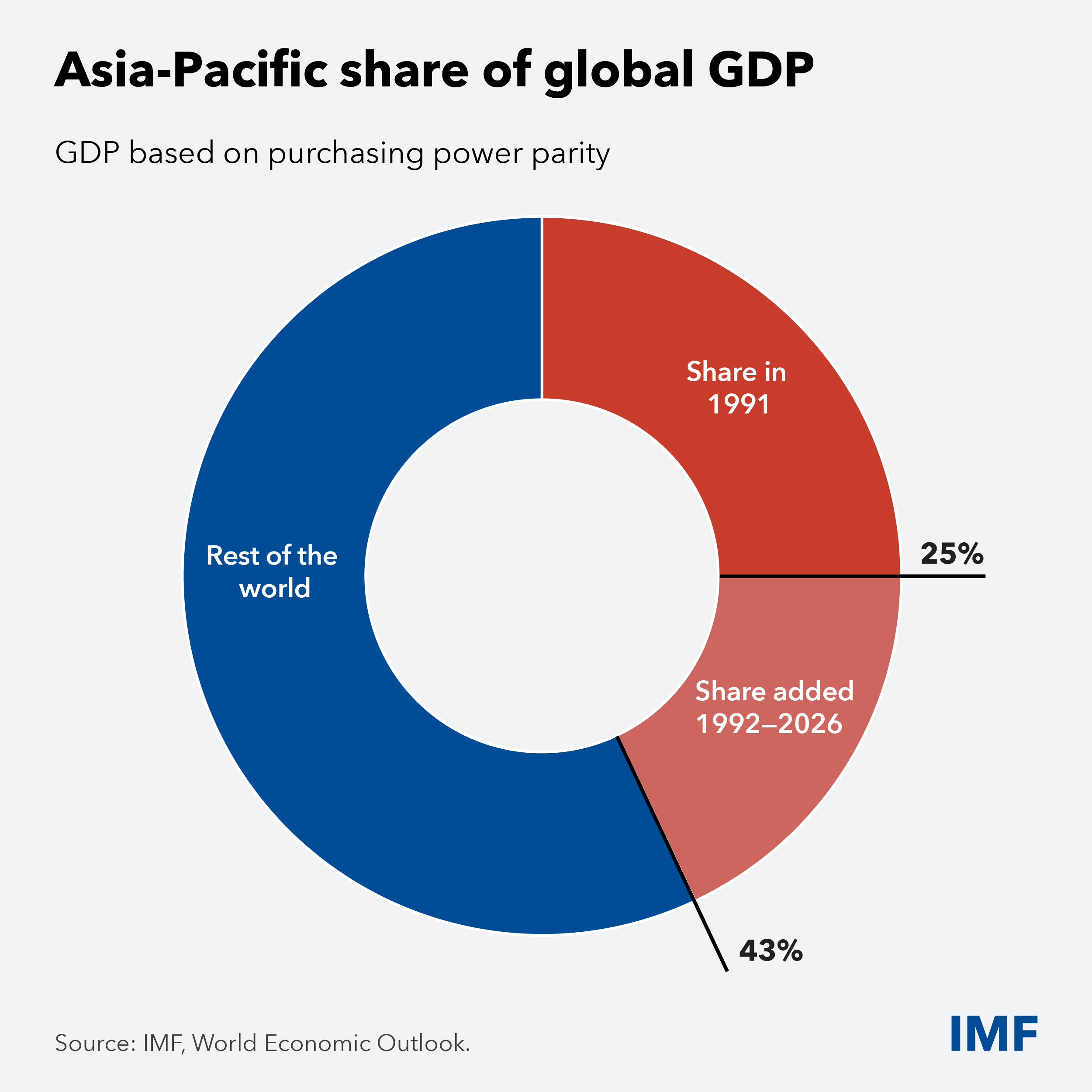
It is vital that they do, and Thailand is just the right host to have—another open and dynamic country at the heart of a vibrant region. Since Thailand last hosted our Annual Meetings 35 years ago, in 1991, Asia-Pacific’s share of global GDP has gone up from 25 percent to 43 percent.
Asia and the world have steered through shock after shock with remarkable agility.
But whether this fortitude will be sustained and whether the world’s underwhelming growth rates this decade can be bettered will depend on our success in navigating three major crosscurrents: the rapid arrival of AI, persistently high energy prices, and record levels of public debt.
This will be the central focus of our discussions in Thailand next week.
Let me start from the context in which our Meetings will take place. To put it simply, the global economy is being pulled in two opposite directions: a negative energy supply shock and a positive demand shock from AI. The combined impact of these two forces is highly uneven across the world.
Our World Economic Outlook will show that steady global growth has continued since the Spring, but behind the averages there are significant variations. The largest hits to growth this year are in economies ravaged by war: a war on Ukraine in its fifth year, a war in the Gulf in its eighth month, and too many other raging conflicts, destroying lives and causing global economic damage.
Smaller and more scattered hits to growth are also seen in other vulnerable countries, those reliant on energy imports and lacking sufficient policy space to cushion shocks.
But we will also see higher growth in a few places—which takes me to the role of AI.
Love it, hate it, or fear it, AI is here, rapidly becoming a key driver of countries’ relative fortunes in the world economy.
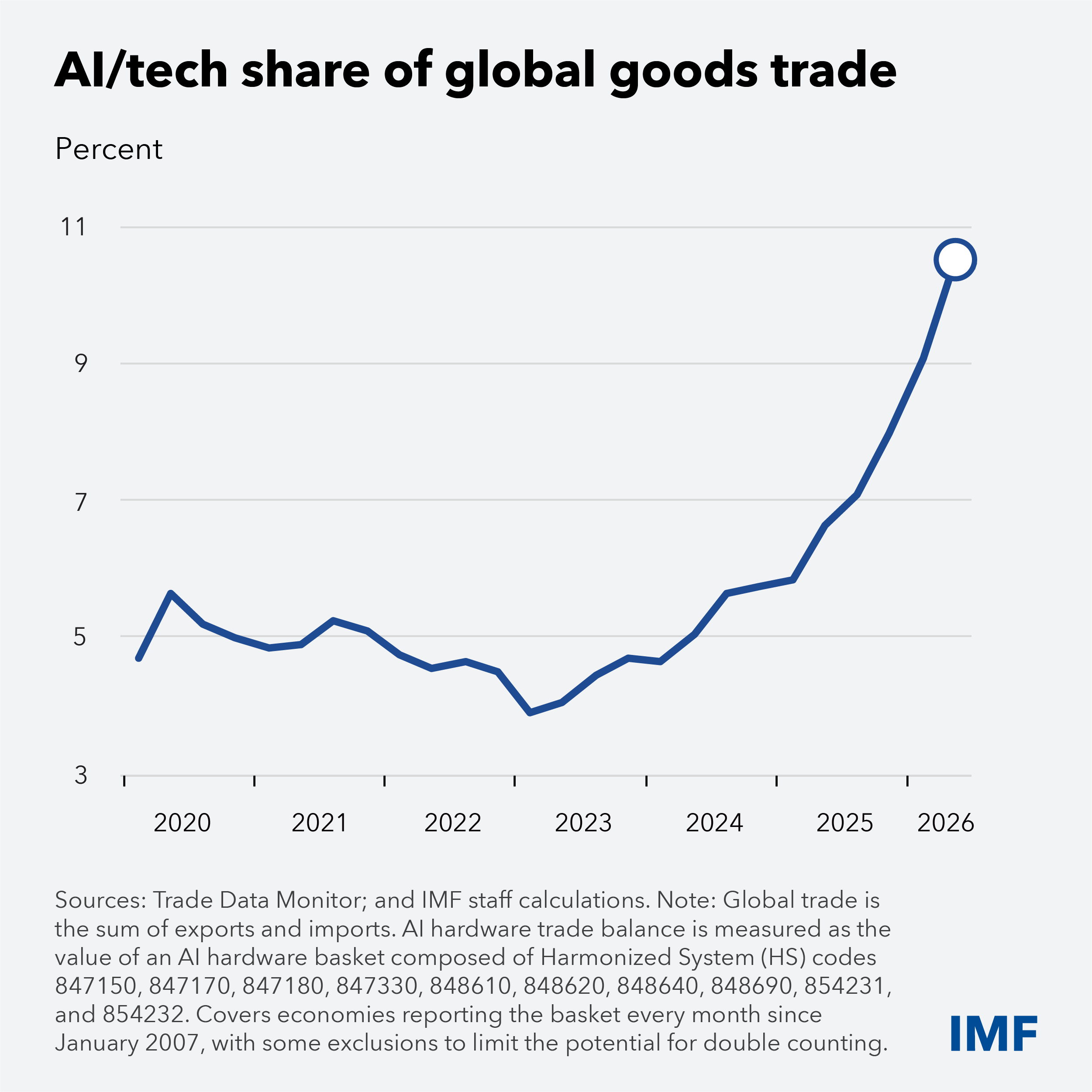
Global investment-to-GDP in AI will reach and likely exceed the amounts that went into building the railroads, the electricity grid, or the telecommunication network. We estimate AI hardware and related tech products now account for more than one-tenth of world goods trade and rising.
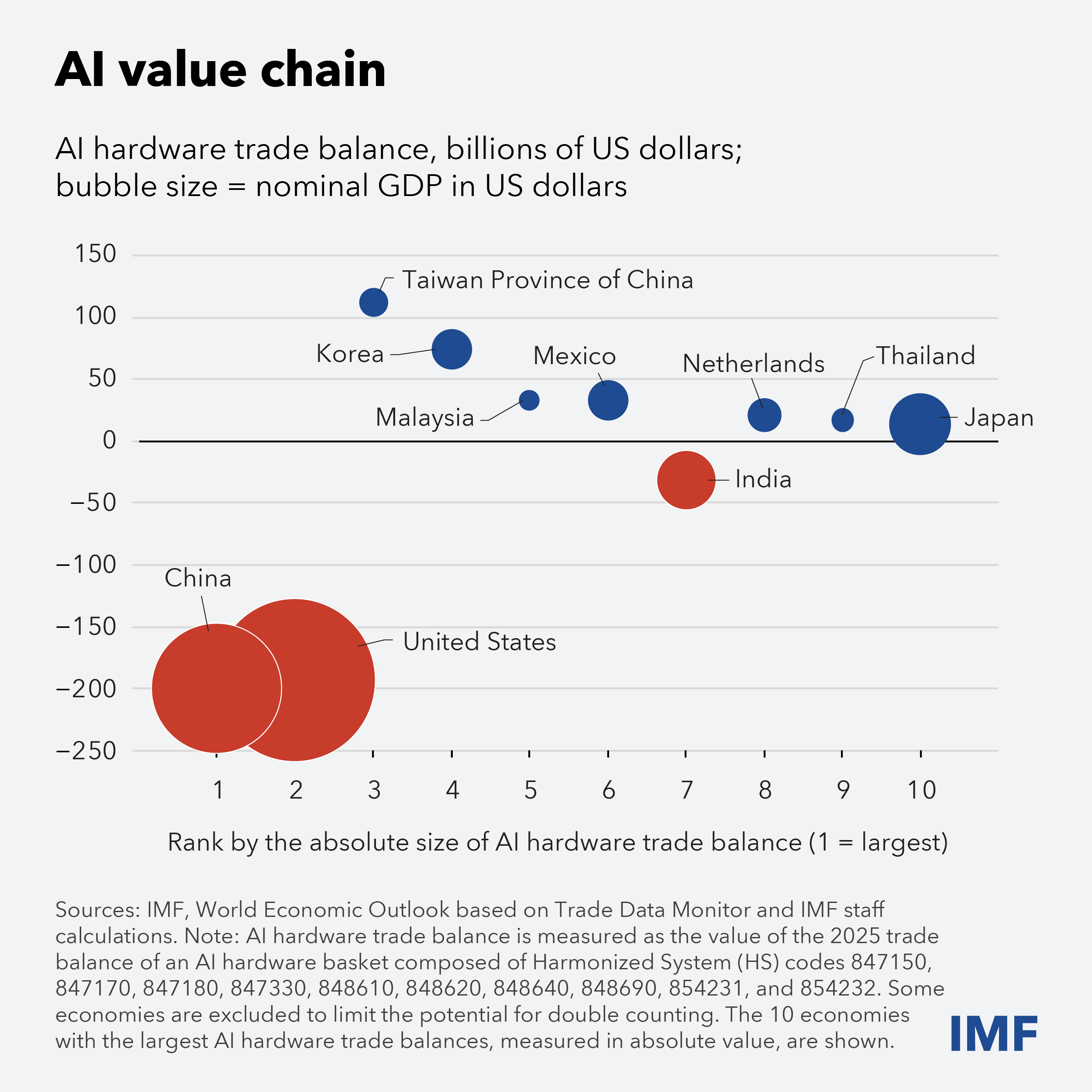
Growth in AI-related trade reflects the investment boom in economies embedded in its value chain. These include the U.S., China, and India as net importers of AI hardware, building the infrastructure to be key AI providers. And then five of the seven other economies in the top‑10 are Asian, supplying everything from top-end microprocessors to memory chips, chip-making machines, and robotics.
Yet as this drives forward today’s AI economies, it largely bypasses most others, increasing the risk of widening economic inequality across the globe.
AI also adds to energy demand, which takes me to the second top-of-mind topic at our Annual Meetings: the rising cost of energy and, with it, fertilizers, food, and key industrial inputs—with food security put at even greater risk by this year’s super El Niño. This pushes inflation up and growth down.
So far, the energy price shock has been large but contained thanks to energy efficiency, fuel-source diversification, reserve releases, supply chain agility, and the usual organic demand and supply response.
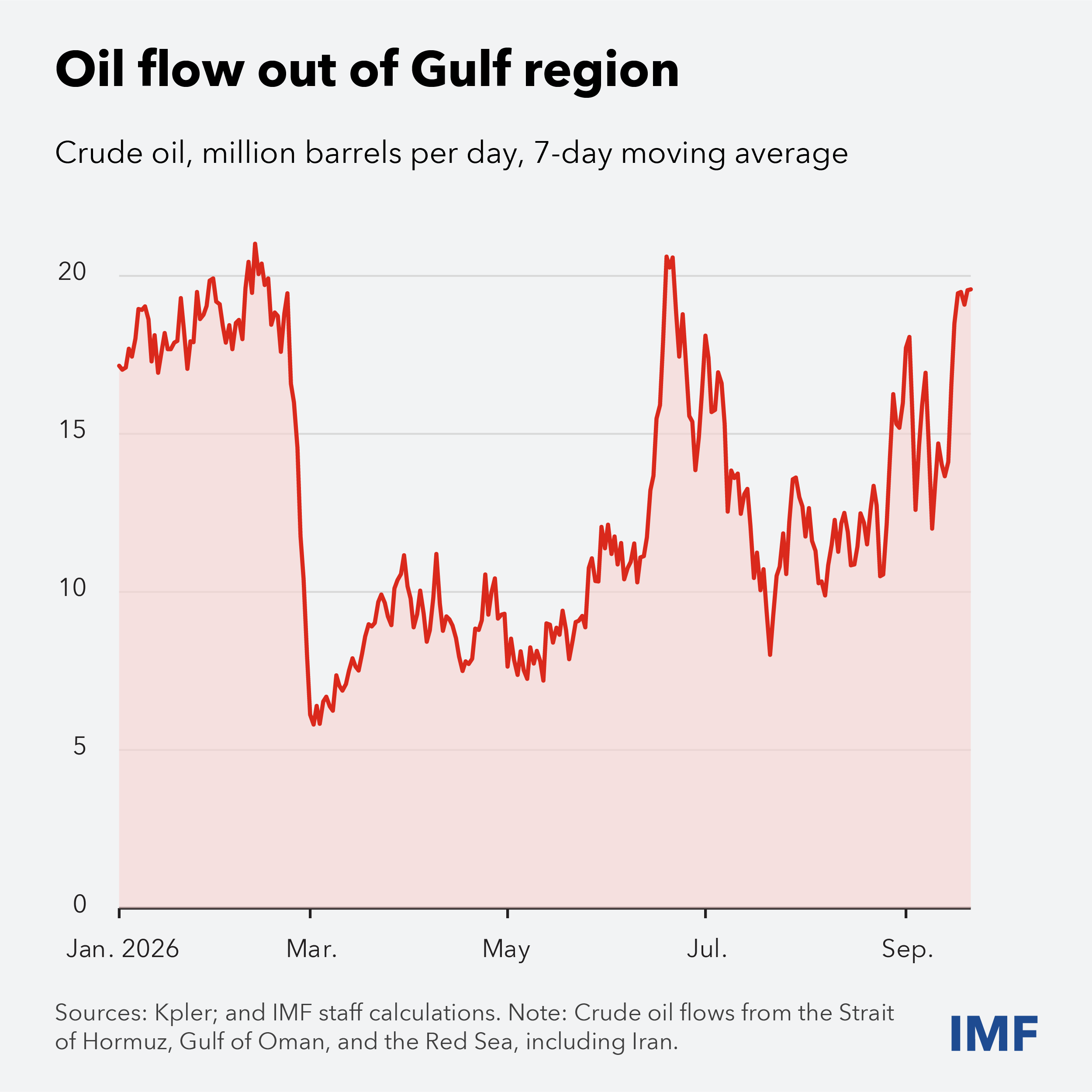
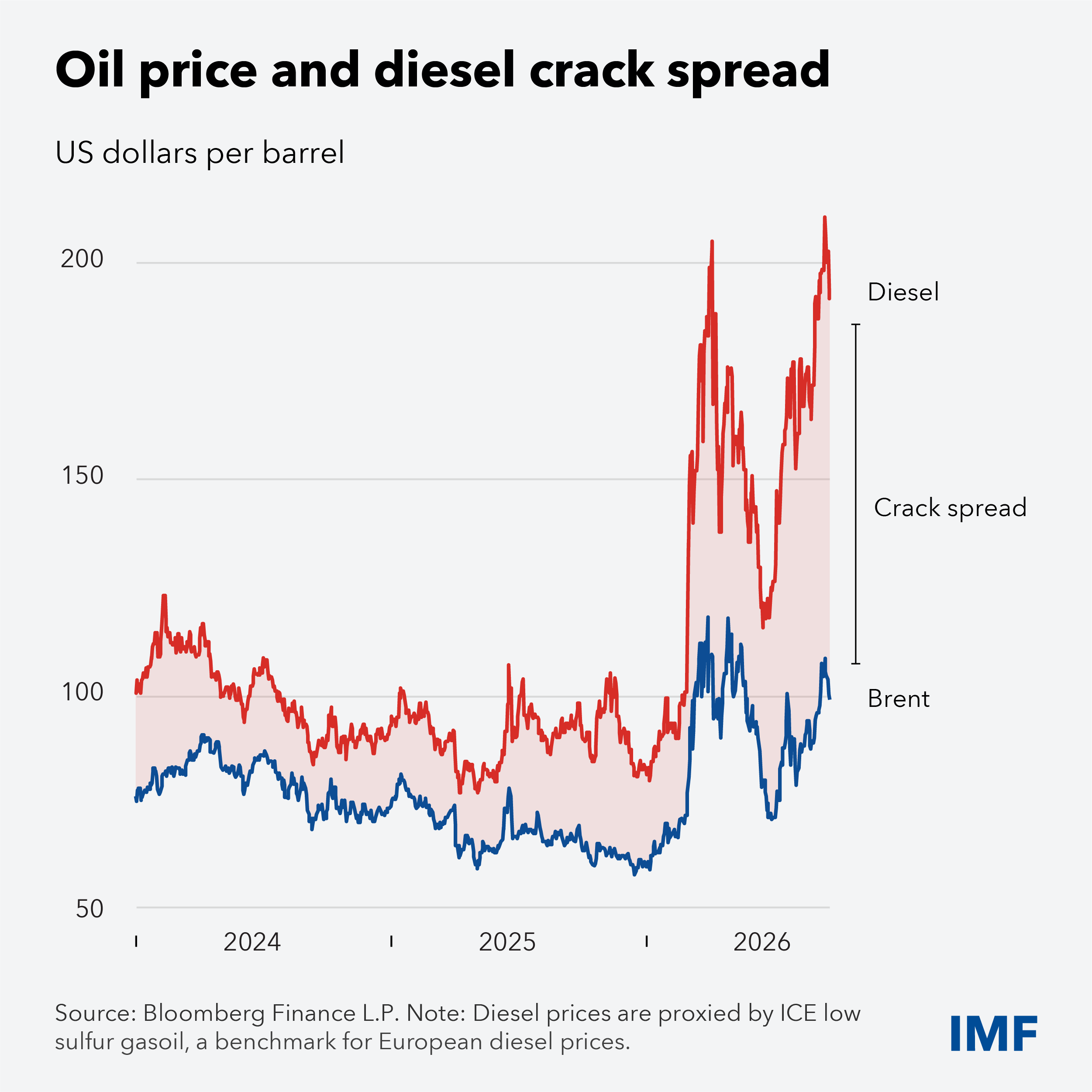
Nonetheless, despite a shaky recovery of flows out of the Gulf, oil prices remain around $100 per barrel reflecting risks, high transport costs, and other factors.
Add to this a crack spread of about another $100 per barrel due to a global shortfall in refining capacity, and we get retail prices of diesel and other refined products at record highs.
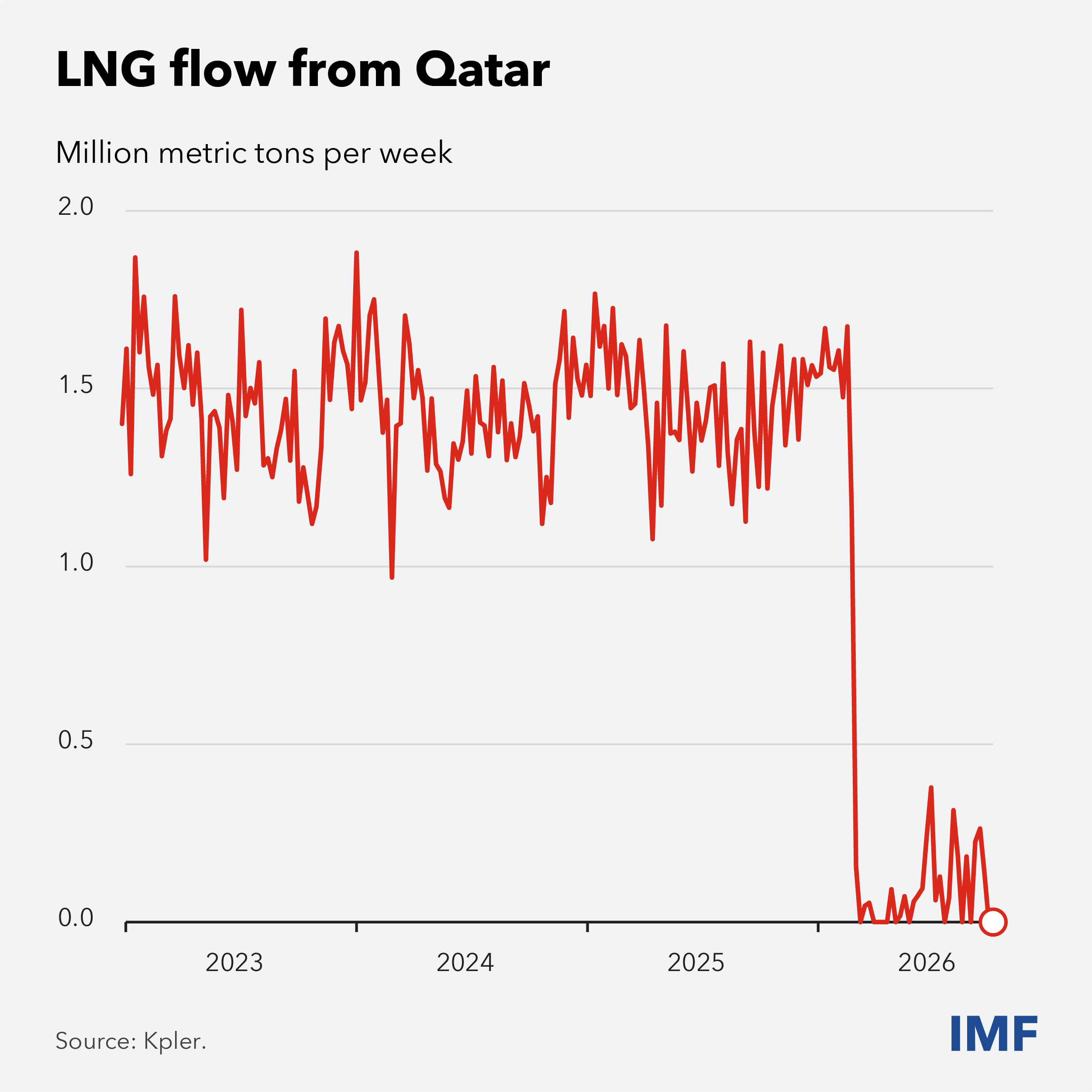
In addition, natural gas supply from the Gulf remains severely impaired, reflecting more-limited LNG transport options for as long as shipping through the Strait of Hormuz remains threatened. This has uneven impacts across the world, with Asia and Europe particularly hard-hit.
And, to quote from Game of Thrones, winter is coming. Price pressures may build further as countries replenish reserves and demand rises with the approach of the Northern hemisphere cold season.
Even if the war in the Gulf were to end soon, the problem of high energy prices would likely persist for some time. Brent futures, for example, now predict high oil prices through 2027.
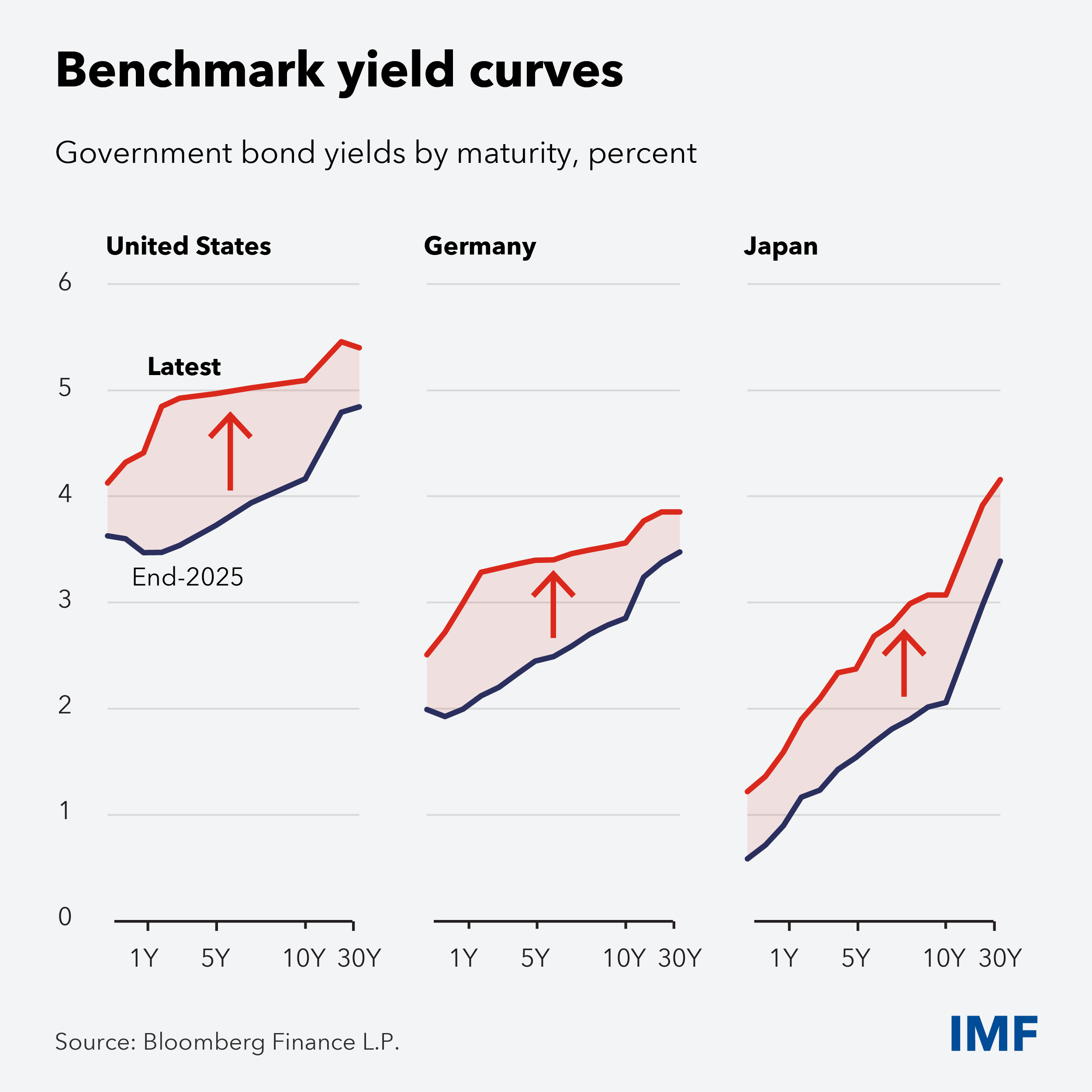
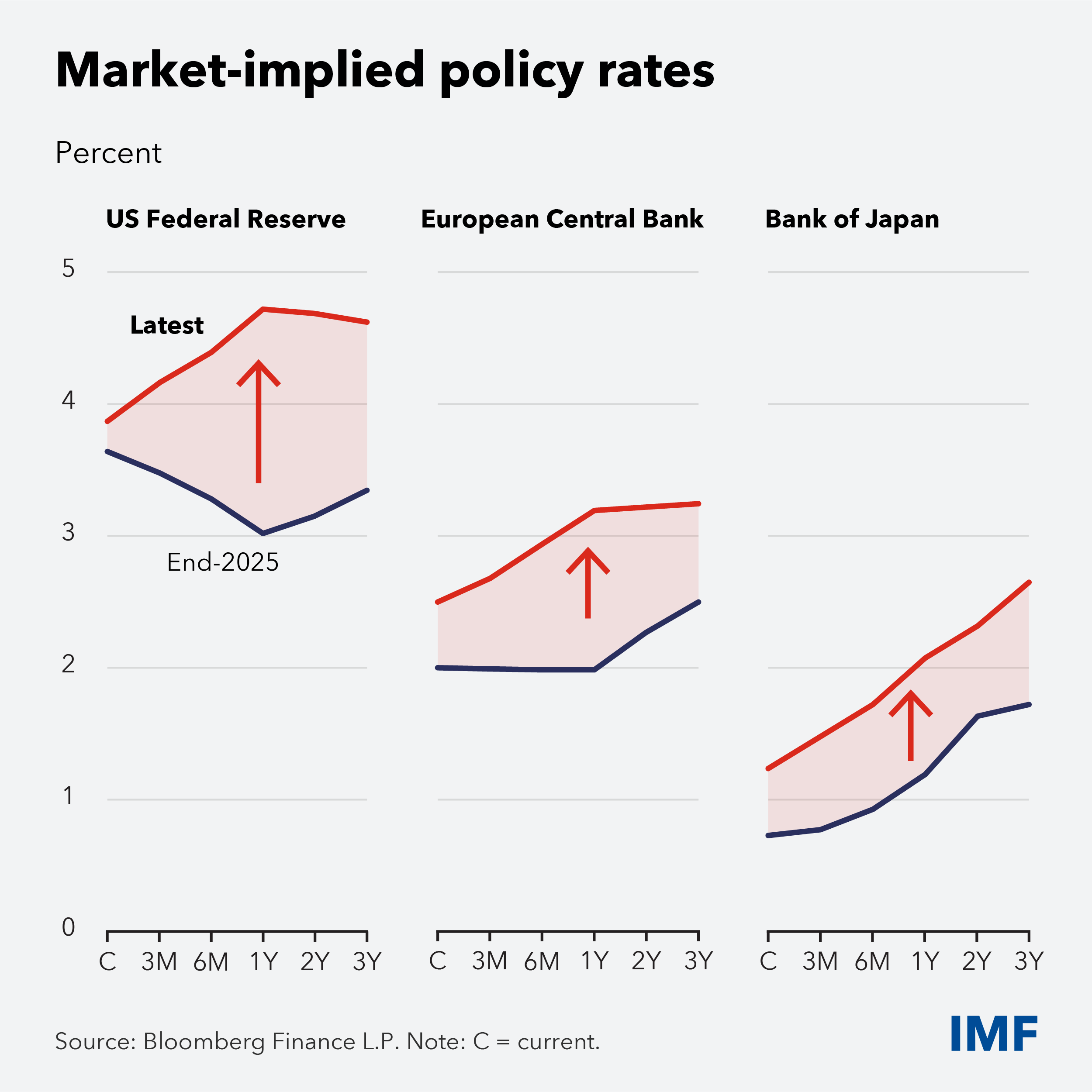
Higher energy prices are pushing up inflation, policy rates, and benchmark yield curves. After going up very significantly this year, U.S., German, and Japanese 10‑year sovereign yields are now at their highest levels since 2007, 2009, and 1996, respectively, and are still climbing.
This takes us to the third major factor affecting the global economy today: excessive fiscal deficits, record levels of public debt, and high debt-servicing costs.
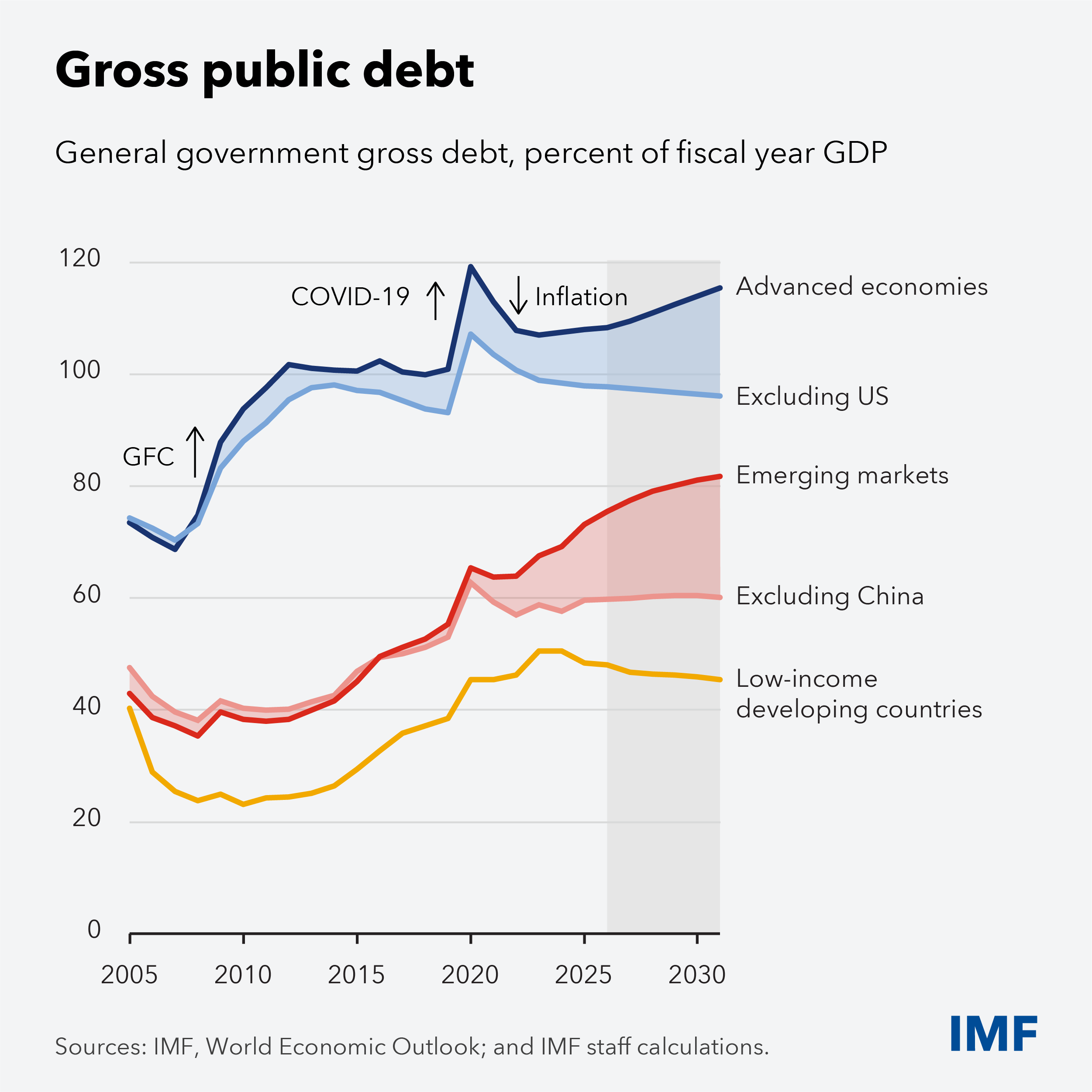
Global public debt is near its highest levels since after World War II and is on track to soon exceed 100 percent of GDP.
Advanced economies are the worst offenders with some of the highest gross debt loads. Debt-to-GDP ratios are generally lower for emerging markets and lower still for low-income countries, although we have to recognize that, in comparison to advanced economies, these two sets of countries also have relatively lower revenues to service debt.
For many emerging market economies, the effects of rising core yields on funding costs are still being partially offset, for now, by tight risk spreads—the result of hard work over the decades to strengthen policies, frameworks, and institutions, but also of still-easy financial conditions.
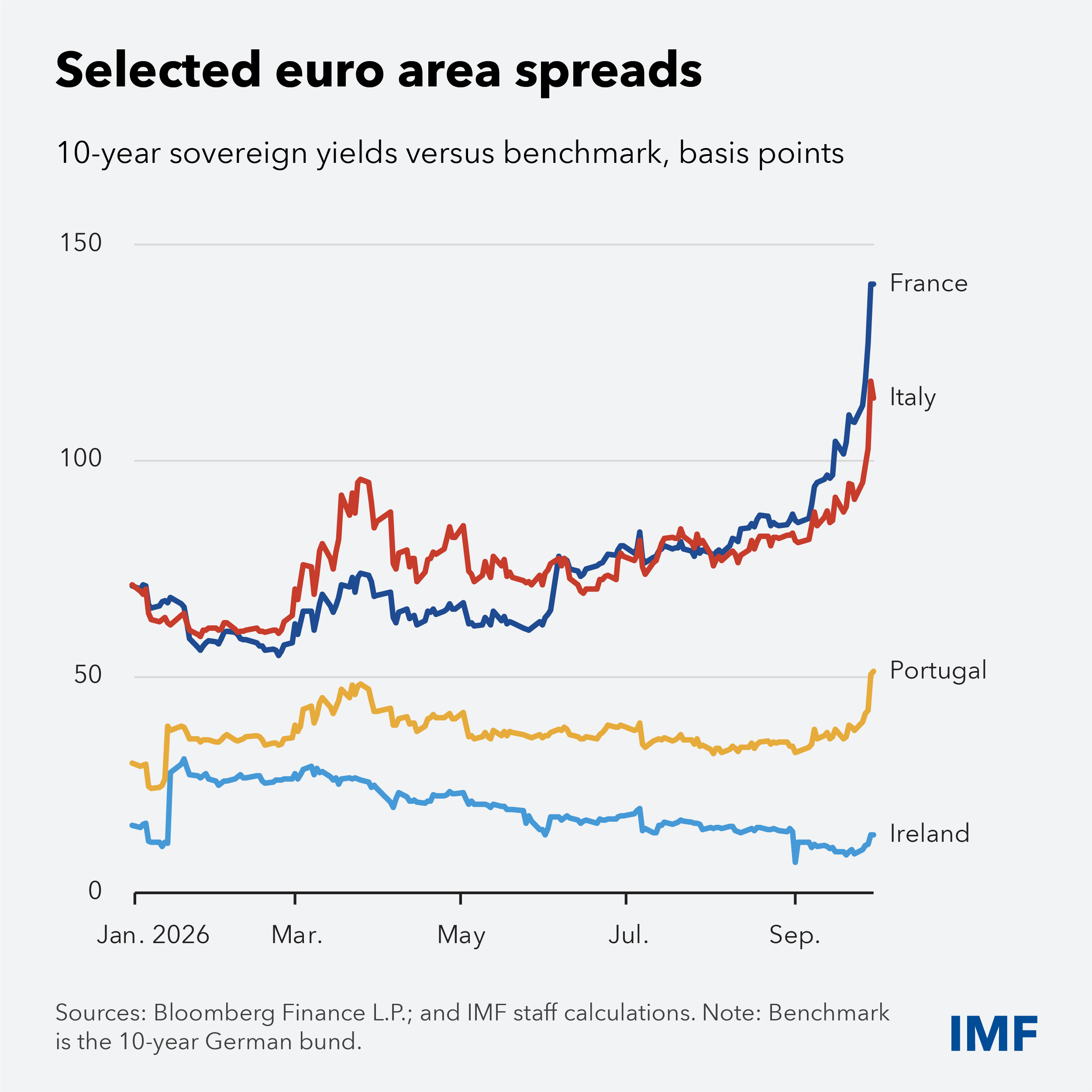
For high-debt countries in the euro area, the situation is more challenging as bond spreads to German bunds keep rising—not only for France and Italy but also to a lesser extent for countries that successfully reduced their debt and deficits after the euro area crisis, including Ireland, Portugal, and others.
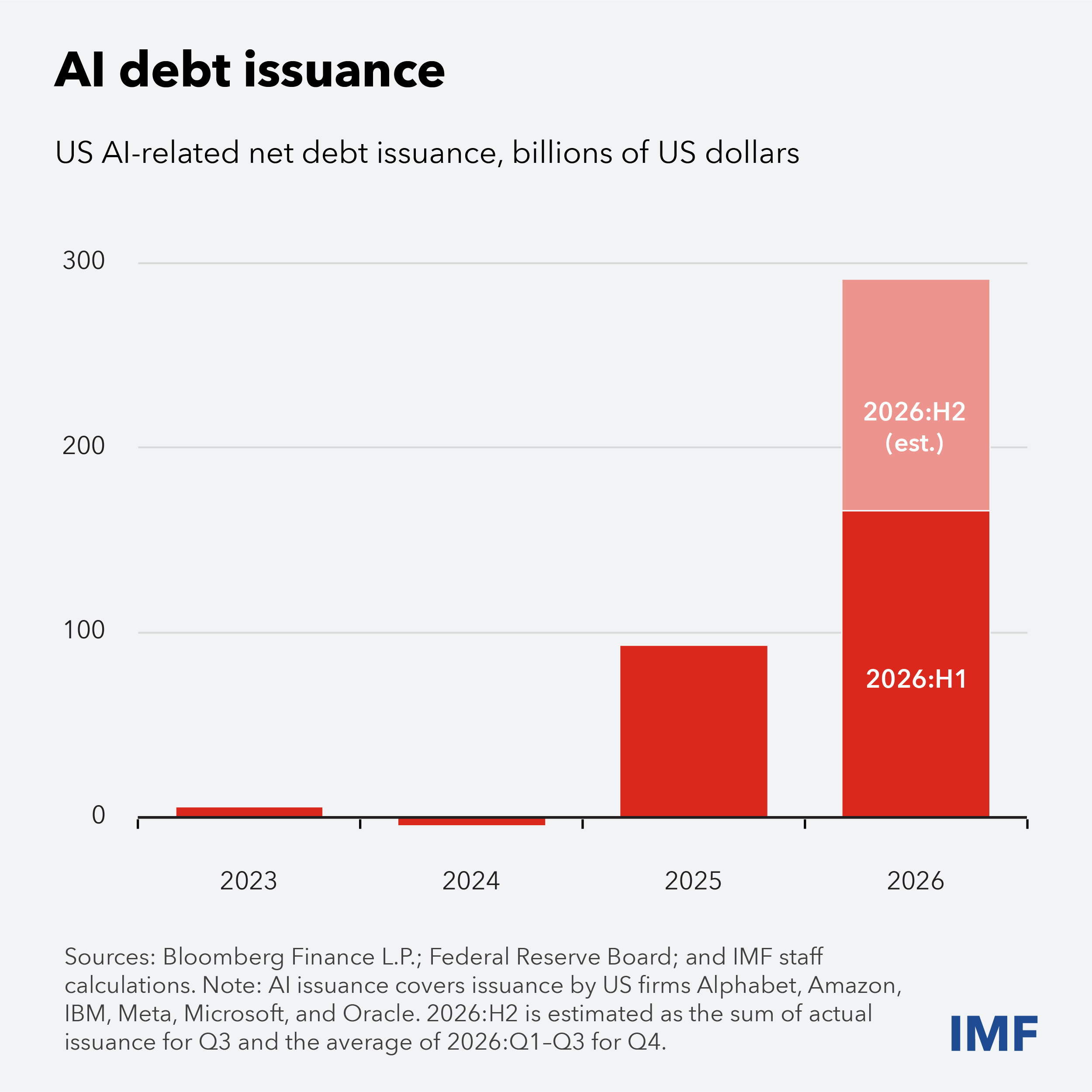
AI enters this mix in two ways. First, rising long-term private bond issuance competes for savings. Second, some portion of the increase in core yields may reflect anticipation of faster growth in the future.
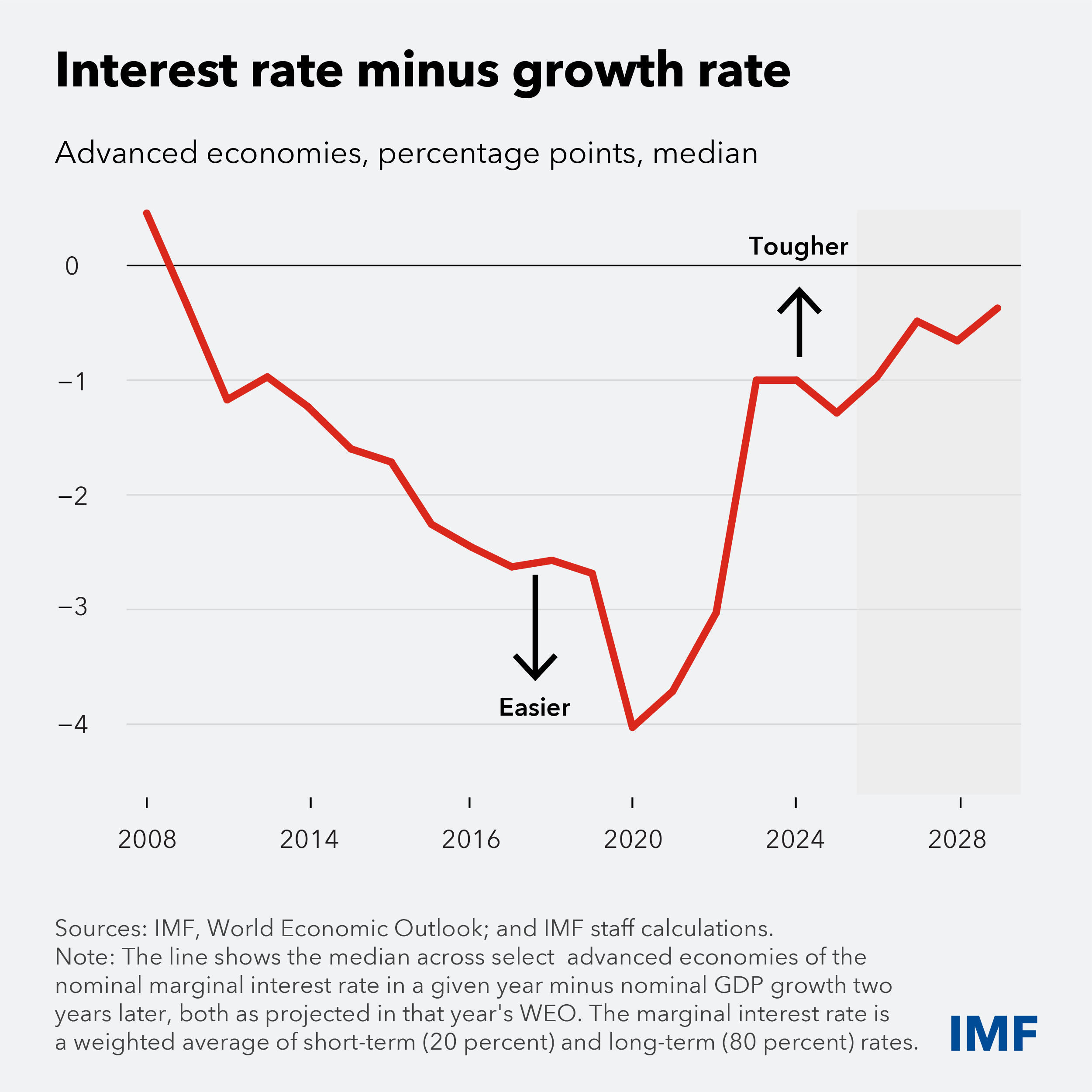
Yet expectations of higher growth solving fiscal problems can cause policy complacency. Policymakers had a relatively easy ride over the last 17 years as for all that time interest rates were stuck below GDP growth rates.
Economists are fond of expressing this as the interest-to-growth differential—“r ‒ g”—which is much less favorable now than it was in the past many years and is set to climb higher. What this means is that the size of the growth pick-up needed to reduce public debt-to-GDP ratios without fiscal effort looks out of reach in the near term.
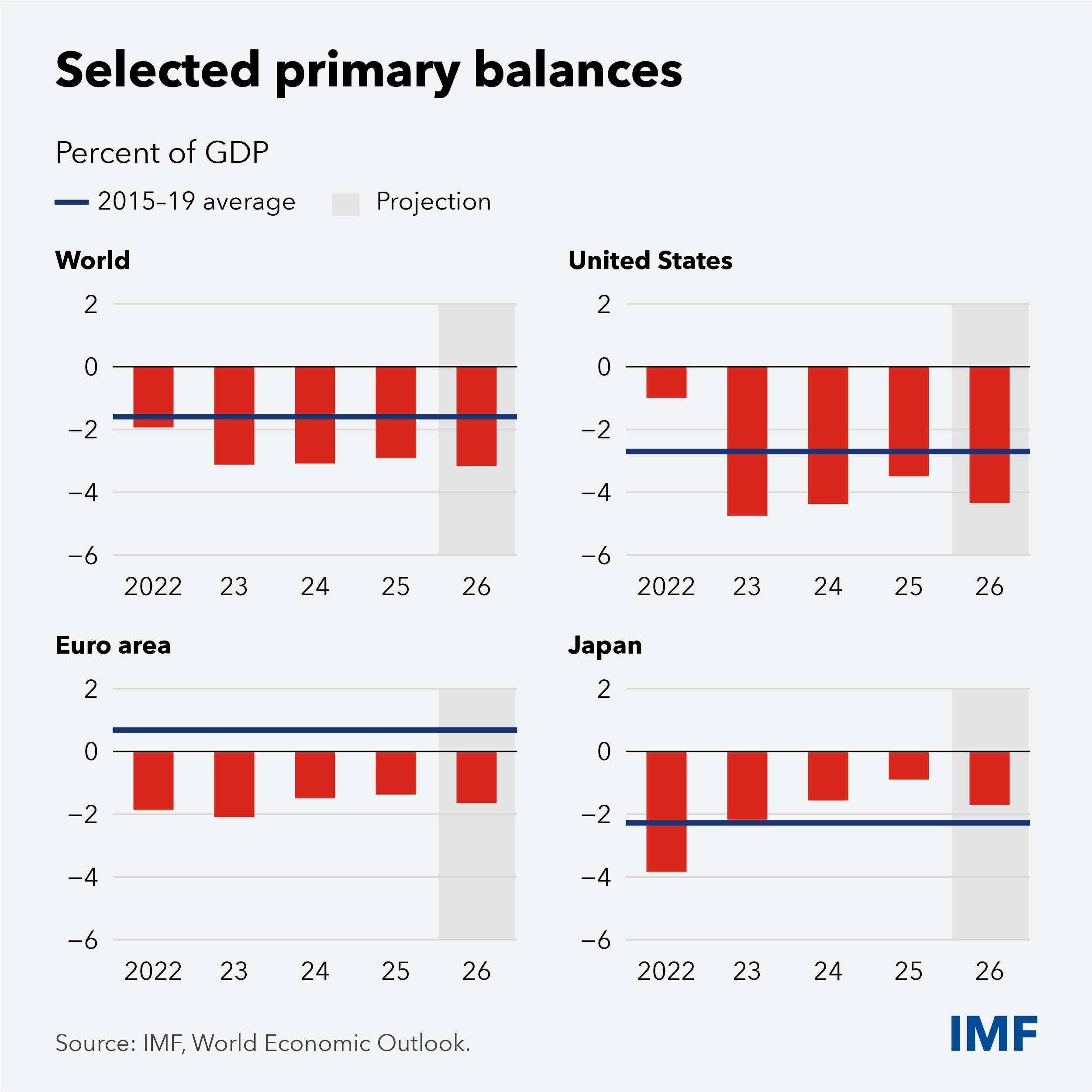
Higher core bond yields, of course, also reflect fiscal policy. With the succession of recent shocks having ballooned the public debt, and with most primary deficits having remained larger than their pre-pandemic averages over 2015‒19, fiscal space is crying out for replenishment.
The situation demands an urgent and comprehensive set of policy responses.
Let me speak to monetary policy first. In many countries inflation exceeding target has been a headache for quite some time—in the U.S. case for over 5½ years. We draw comfort from long-term inflation expectations staying anchored, but let us not forget the simple fact that inflation is only anchored until it is not—as I learned the hard way from Bulgaria’s hyperinflation.
The AI building boom is inflationary. The energy and food shocks are inflationary. Tariffs, defense spending, and high public debt can be inflationary. And memories of the recent high inflation are still fresh.
Now may be a good time for a prudently hawkish bias in many countries’ monetary policy—and it is highly appropriate that the U.S. Federal Reserve, the ECB, and the Bank of Japan have all raised rates and spoken firmly, with future policy rate paths repricing accordingly.
Staying in the central banking lane, a few words on financial stability policy.
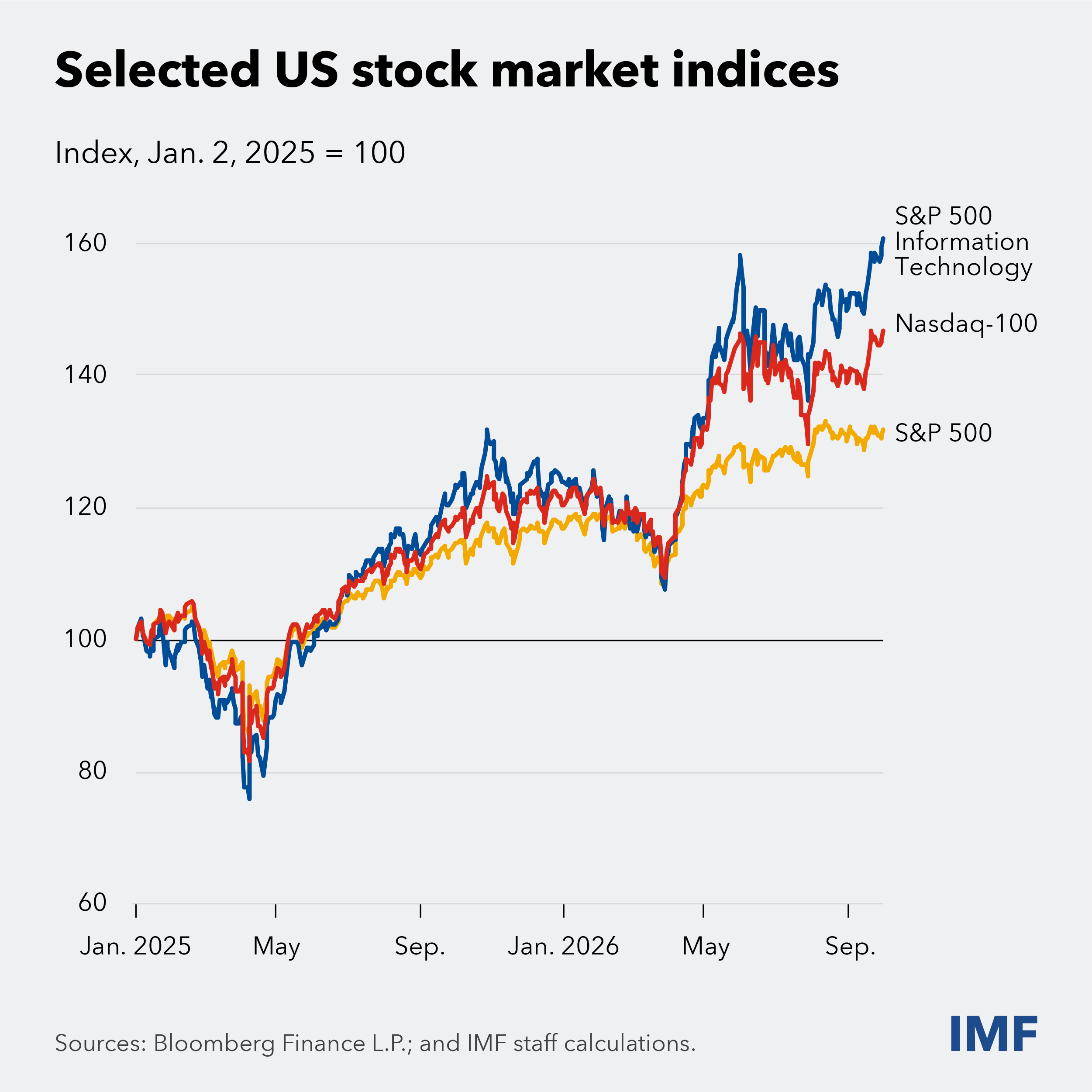
Given rising economic and financial concentration in AI, we would be wise to remember Amara’s Law, which says we tend to overestimate a new technology in the short run and underestimate it in the long run. It is somewhere in the transition between today’s AI building boom and tomorrow’s arrival of AI’s benefits that we will traverse the period of maximum risk.
Strong corporate earnings are driving share prices and wealth effects. Should earnings fall short, however, hyperscaler leverage and large and growing global holdings of U.S. equities could turn a disappointment into a far-reaching shock.
Here the first line of defense, of course, is regulation and supervision.
So now to fiscal policy: the place where all pressures meet. Elevated yields are inflating the interest bill at a time of tight budget constraints and competing spending priorities, including defense. Higher policy rates then lift the short end, feeding directly into the cost of short-term debt.
And yet we don’t see decisive action in the high-debt advanced economies where the need of the hour is for credible medium-term fiscal consolidation plans, supported in some cases by upfront fiscal measures, including to take some of the pressure off monetary policy.
Emerging markets can find themselves confronting not only higher funding costs from rising benchmark yields and wider spreads, but also more volatile capital flows related in part to financial innovation. These economies, too, should strive to expand their fiscal space, while also growing their foreign exchange buffers.
Low-income countries, already hurting from financing constraints, high interest-to-revenue ratios, small tax bases, and shrinking aid flows, may be forced to cut much-needed development spending—a regrettable spillover that shows the collective nature of the fiscal challenge.
Putting all of it together, my message to the world’s economic policymakers next week will be this: we cannot keep delaying necessary policy action—you have the tools, now have the wisdom to use them.
We at the IMF know fiscal consolidation will be a heavy lift. After a succession of shocks where, each time, fiscal policy has had to step in to cushion the impact, populations have grown accustomed to state support. Some very tough political choices stare us in the face.
To succeed, policymakers need to, first, explain why consolidation is needed; second, make plans that limit the costs to future growth to the extent possible and protect the most vulnerable; and third, pursue complementary structural reforms.
Yes, growth alone cannot solve the fiscal problem, but growth certainly helps.
Ambitious reform programs would support the fiscal effort, by delivering better workforce skills; more flexible labor markets; greater ease of corporate entry and exit; better access to patient risk capital; and energy security.
In an unforgiving global environment that leaves no room for self-inflicted injuries, I will urge authorities everywhere to slash red tape, clean out the cobwebs of obsolete rules accumulated over time, and free up the power of entrepreneurship.
Happily, these are the same attributes and policies needed to get the best out of AI—where the core benefits derive not from the short-run boost to demand from laying the tracks, but from the long-run boost to productivity from adoption.
IMF research suggests that AI, if done right, could over time deliver up to half a percentage point of extra world growth annually. Just think of it: going from 3 percent to 3½ percent—it will add an economy the size of ASEAN to the world economy over a decade.
We will learn as we go, but we know AI preparedness is key, including digital infrastructure, labor market readiness, and regulatory guardrails. This will help capture the benefits and manage AI’s substantial perils: large-scale labor market fallout, serious cyber and stability risks, and frontier models threatening to escape human control and run amok.
Singapore can take pride in knowing that it ranks at the very top of the IMF’s AI preparedness index—bravo and keep it up.
Success requires everybody be taken along to harvest the transformative power of AI, which is why it will be so important to deliver AI access around the globe. And that, of course, calls for cooperation.
In our interconnected world, countries cooperate not out of charity but out of self-interest. That is how trade finds its way around the obstacles thrown at it. That is why our members are keen to come together next week in Bangkok.
President Tharman, you have made many substantial contributions to international cooperation. Among them was leading the IMF’s highest guiding body through a period of economic turmoil in Europe. Cooperation kept the crisis from festering and spilling over to the rest of the world.
Today, you host this kick-off of our 2026 Annual Meetings as the President of a country that has successfully transformed its economy and dramatically improved the lives of its people with prudent policies, sound institutions, and collaboration with its neighbors and the rest of the world.
These are the very same qualities the global economy needs in its quest for prosperity during this time of profound change. It is so fitting that I call on the world to embrace them from this stage, right here, at the Lee Kuan Yew School of Public Policy in Singapore.
Thank you.